Late talker, or something more? What to look for
Some toddlers take longer to start talking. Here is what is typical, what to watch for, and when it helps to ask.
Every child starts talking in their own time, and a wide range is normal. Many toddlers who talk late catch up by the time they start school. Some do not, and it is hard to tell which path a child is on just by waiting. Knowing what is typical helps you decide when to ask.
What is typical
- By 18 months, most children try to say three or more words besides “mama” or “dada”.
- By 2 years, most say at least two words together, like “more milk”.
- By 30 months, most say about 50 words and join words with an action, like “doggie run”.
Understanding matters as much as talking
Notice how much your child understands. Do they follow simple directions, point to pictures when you name them and turn when you call their name? Children who understand well but say little often need different support from children who also find understanding hard. A speech and language therapist looks at both.
Signs it is worth a conversation
- No babbling or gestures like pointing by around 12 months
- Few or no words by around 18 months
- Losing words or skills they used to have
- Family or teachers often find their speech hard to understand
- You feel something is different, even if you cannot say exactly what
What you can do today
- Talk about what you are doing together: “You’re pouring the water. Splash!”
- Add one word to theirs. If they say “car”, you say “red car”.
- Pause after you speak. Children often need a few seconds to reply.
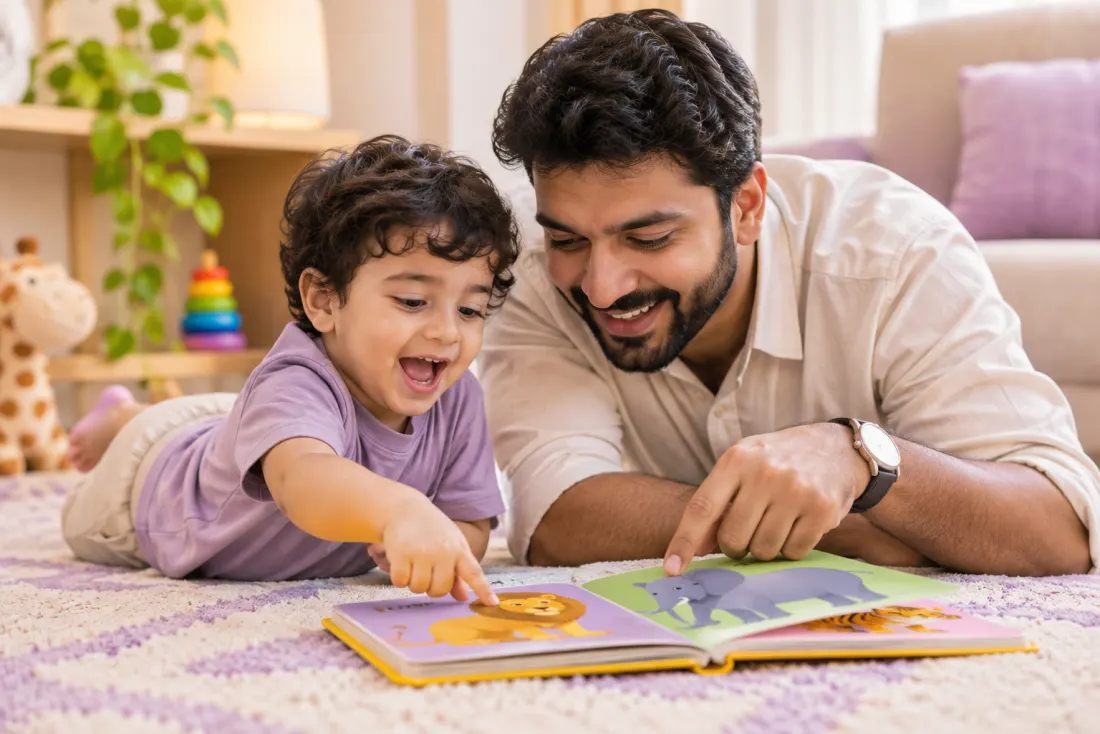
- Read together every day: point, name and wonder aloud.
If something is on your mind, it is always fine to ask. An assessment gives you a clear picture either way, and support can begin sooner if it helps.